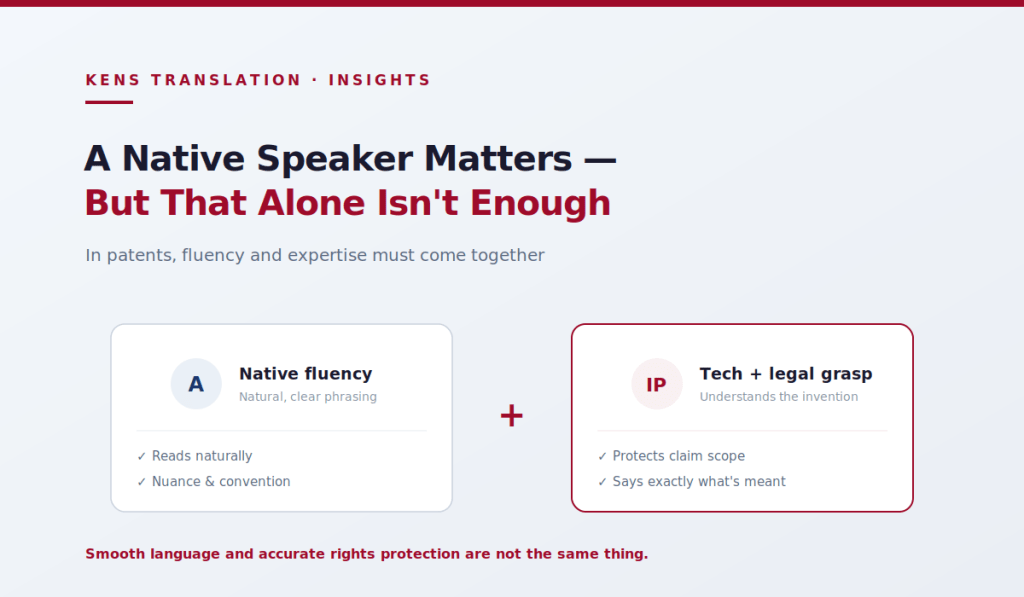
When choosing a patent translation provider, you’ll often hear the phrase “native-speaker translation.” It sounds reassuring—and it does matter. But in patent translation, being a native speaker is only part of the picture. Here’s a closer look at what it does and doesn’t guarantee.
What a native speaker brings
Translating into one’s native language has real advantages. A native speaker has an intuitive feel for natural phrasing, subtle nuance, and the conventions of how things are expressed in the target language. For the final text to read as though it was written—not translated—this instinct helps.
In patent translation, this matters for clarity. A specification that reads naturally in the target language is easier for an examiner to follow, and less likely to create ambiguity through awkward or unnatural expression.
Why native fluency alone isn’t enough
But here’s the catch. A patent specification isn’t ordinary prose—it’s a technical and legal document where a single word can shape the scope of a right. Fluency in the language doesn’t automatically bring an understanding of the technology, or of how patent claims define protection.
A native speaker without technical and legal grounding may produce text that reads beautifully yet subtly misstates the invention, or narrows a claim without realizing it. Smooth language and accurate rights protection are not the same thing.
The real answer: fluency and expertise
This is why strong patent translation combines both. Language ability ensures the text reads naturally and clearly; technical and legal understanding ensures it says exactly what the original means, no more and no less. Neither alone is sufficient.
That’s also why review matters so much. Even a skilled translator benefits from a second specialist checking the result against the source—confirming that natural phrasing didn’t come at the cost of accuracy.
In closing
A native speaker brings valuable fluency to patent translation—but fluency alone doesn’t protect a right. What matters is the combination: natural language and a genuine understanding of the technology and the law behind the document.
At Kens Translation, our work brings these together—specialists who understand technology and law, supported by careful review. If you’re weighing your options for patent translation, we’d be glad to help.
Kens Translation
Patent · Legal · Technical Translation | Korean · English · Chinese · Japanese
📧 kens@kens-trans.com | ☎ +82-2-2645-5888 | 🌐 www.kens-trans.com
 Kens Translation
Leave a comment